The Enduring Icon: Exploring the Volkswagen Bus Phenomenon
When I think about truly iconic vehicles, the Volkswagen Bus inevitably springs to mind. It's not just a vehicle; it's a whole vibe, a symbol that means different things to different people across the globe. We're talking about an automobile that transcended its initial utilitarian purpose to become a cultural touchstone, a canvas for countless memories, and an engineering marvel that keeps on inspiring generations. You know, it’s quite fascinating how a simple design can capture the imagination of millions.
The Humble Beginnings: Birth of a Legend
The story of the Volkswagen Bus, officially known as the Type 2 Transporter, began right after World War II, a time when Europe was in the midst of rebuilding. Volkswagen, still under British control at that point, was primarily focused on producing the Beetle. However, a brilliant Dutchman named Ben Pon, a Volkswagen importer, saw a gap in the market. During a visit to the Wolfsburg factory in 1947, he sketched out an idea for a simple, versatile utility vehicle. His vision was a vehicle that could carry goods, based on the Beetle’s reliable, robust chassis. What they came up with, the Type 2, was an instant hit. I mean, who wouldn't love a vehicle that could haul goods during the week and take the family camping on the weekend?
The first production model rolled off the line in 1950, and it was an immediate success. Its design was revolutionary: a cab-over-engine layout that maximized interior space, a sturdy chassis, and the familiar air-cooled, rear-mounted engine derived from the Beetle. It wasn't about speed; it was about utility, reliability, and sheer practicality. We often forget how revolutionary that approach was at the time, offering unprecedented cargo capacity relative to its footprint.
Evolution Through Generations: From T1 to T6
Over the decades, the VW Bus has undergone several significant transformations, each generation adding its own flavor to the legacy.
- The T1 'Split Window' (1950-1967): This is arguably the most recognizable version. With its distinctive split windshield, large VW badge, and cheerful demeanor, it embodies classic Bus charm. You'll often hear people call it a 'Samba' if it has the extra roof windows and two-tone paint. It was an instant hit for commercial and personal use, and it quickly found its way into the hearts of adventurers and families.
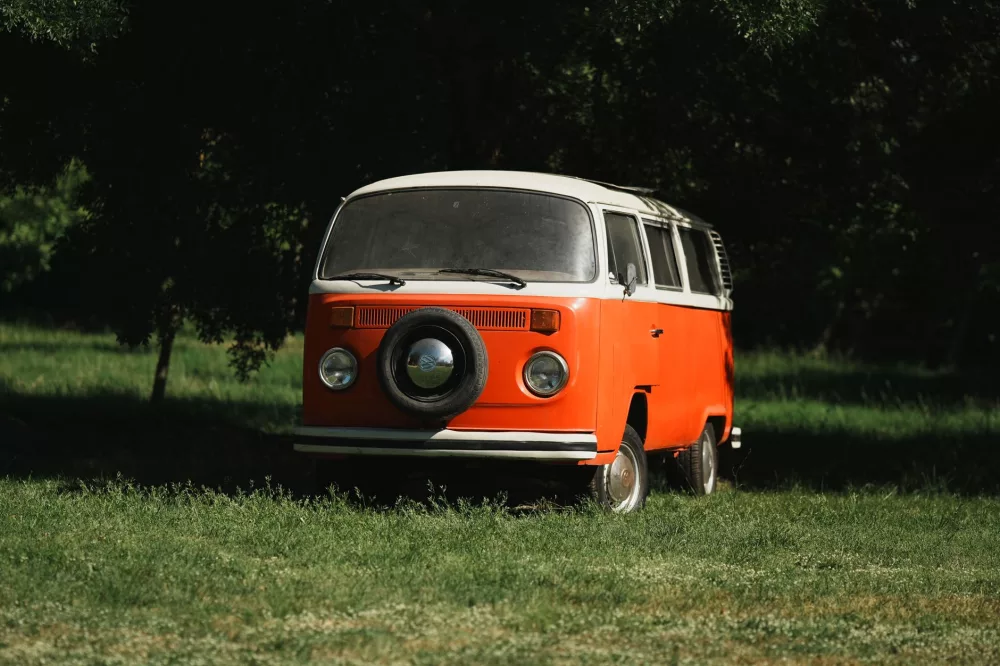
- The T2 'Bay Window' (1967-1979): The T2 brought a more modern, single-pane windshield and updated suspension, offering a much-improved driving experience. It had larger windows and more interior space, too. This was the era where it truly became synonymous with counterculture and surf trips, especially in America. I think many of us picture this version when we think of a 'hippie van,' don't you?
- The T3 'Vanagon' (1979-1992): A noticeable departure, the Vanagon introduced a squarer, more robust design. It retained the rear-engine layout for its initial years but eventually adopted water-cooled engines. It offered more creature comforts and improved safety, appealing to a broader family market. This version still maintains a strong following, particularly for its camper variants.
- The T4 'Eurovan' (1990-2003): This was a radical shift, moving to a front-engine, front-wheel-drive layout. While it lost some of the classic Bus's aesthetic and rear-engine charm, it gained modern car-like handling, increased power, and significantly improved interior space and safety. It was a pragmatic move towards contemporary automotive design, even if it wasn't universally loved by purists.
- The T5, T6, and T6.1 (2003-Present): These modern Transporter generations continued the front-engine, front-wheel-drive tradition, becoming incredibly sophisticated and popular commercial and passenger vehicles in Europe and other markets. They’re sleek, efficient, and packed with technology, a far cry from the bare-bones utility of the original.
A Symbol of Freedom and Counterculture
I believe the Bus's real magic happened in the 1960s, particularly in North America. This is where it truly became intertwined with the counterculture, the hippie movement, and the spirit of freedom. You'd see them painted in vibrant colors, adorned with peace signs, and packed with surfers, musicians, and adventurers, crisscrossing continents. It represented a rejection of the mainstream, a desire for simpler times, and the allure of open roads. For many of us, it evokes a powerful sense of nostalgia, doesn't it?
It wasn't just young people, though. Families cherished them for camping trips, small businesses used them as reliable delivery vans, and artists found them to be the perfect mobile studio. The Bus's inherent versatility meant it could be whatever its owner needed it to be, fostering a deep sense of connection and personalization. My personal take is that this adaptability is a big part of why it's so beloved.
The Engineering Charm: Simple Yet Brilliant
Technically speaking, the early Bus models were quite ingenious. A rear-mounted, air-cooled engine, much like the Beetle's, offered a surprisingly spacious interior for its compact footprint. The flat nose design, often called a 'cab-over' configuration, maximized cargo space. It wasn't about speed; it was about utility and reliability. The engineering was straightforward, making it relatively easy to maintain and repair, a significant advantage for those undertaking long journeys far from specialized mechanics.
- Space Utilization: Its boxy shape and cab-over design meant virtually every inch of the vehicle could be used for passengers or cargo. It's truly amazing how much you can fit inside one.
- Reliability: The air-cooled engine, though modest in power, was incredibly robust and dependable, especially in the hands of a careful owner.
- Accessibility: With its high ground clearance and compact dimensions, it could navigate unpaved roads and tight spaces that larger, more conventional vehicles might struggle with.
The Modern Revival: ID. Buzz and Beyond
Even today, the Volkswagen Bus remains incredibly relevant. Classic models are highly sought after by collectors and enthusiasts, with restored examples fetching impressive prices. There's a vibrant community dedicated to restoring, customizing, and preserving these vehicles, ensuring their story continues.
And now, Volkswagen is bringing the Bus into the 21st century with the all-electric ID. Buzz. This modern reincarnation beautifully marries the iconic design cues of the original with cutting-edge electric vehicle technology. It's a bold step, acknowledging the past while firmly embracing the future of sustainable mobility. When I saw the first prototypes, I was immediately struck by how well they captured the spirit of the old Bus in a new, exciting package. It's a sign that the cultural resonance of this vehicle is far from over; in fact, it's just getting a new lease on life.
Why It Endures: More Than Just Metal
So, why does this humble bus continue to captivate us? I think it's its inherent friendliness. It doesn't look aggressive or flashy; it looks approachable, like it's inviting you on an adventure. It represents community, creativity, and the joy of the open road. It's a blank canvas for personalization, a machine that encourages you to slow down and enjoy the journey, not just the destination.
When I see one driving by, whether it's a perfectly restored split-window or a well-loved, slightly rusty T2, I can't help but smile. It carries with it stories of road trips, surf adventures, family vacations, and a generation's quest for freedom. It’s more than just a car; it's a rolling piece of history, an enduring symbol of optimism and adventure that continues to inspire. And that, in my opinion, is why the Volkswagen Bus will always hold a special place in our hearts.
About Editorial Team
Senior columnist and culture critic specializing in architectural designs, emerging high-growth systems, and contemporary philosophies.
All Categories
Recent Posts